
Geneva through the centuries:
19th century
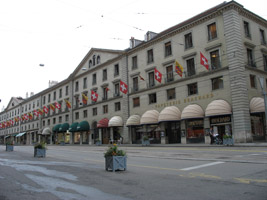
Commemoration of the bicentennial of Geneva’s entry into the Swiss Confederation: the Genevan Restoration (1813–1846)
From Napoleon’s downfall to the Revolution of 1846, Geneva lived through the Restoration era. The old patrician families regained power, yet nothing would ever be quite the same again… The city itself changed: the “domes” that darkened it were demolished, the streets were cleaned, and new neoclassical ensembles were built, such as the Corraterie and the Quai des Bergues, giving Geneva a slightly English feel. Romantic writers and artists from across Europe were happy to stay, wrote about the city at length, and worked on their creations. During the Restoration, the Alps were “discovered,” and the final flickers of the aristocracy played out, alongside the rise of democracy and the birth of fundamentalism.
Evelyn Riedener
+41 79 202 60 68
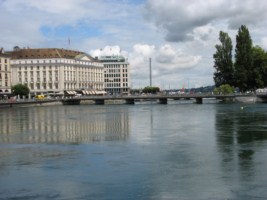
Buildings and figures representative of Geneva’s Restoration period
Since the Middle Ages, Geneva, a hub of international trade, has welcomed guests in hotels of every category. From the Romantic era onward, admiring Mont Blanc became part of visitors’ itineraries, and they could also stroll along the waterfront. As tourism and international conferences grew from the second half of the 19th century, a belt of grand palace hotels built between 1830 and 1950 completed the development of the quays and gardens around the harbor.
Today, these buildings have been restored and, at times, partially redesigned to meet modern comfort standards. They have nonetheless retained most of their original character. Distinguished guests such as Garibaldi, the Duke of Brunswick, and Sarah Bernhardt helped build their reputation. This beautiful walk along the water revives the memory of a dynamic Geneva that set its course early on toward an irreversibly international destiny. For those who wish, the palace-hotel tour can end with a meal or afternoon tea in one of the grand hotels, at a price yet to be determined.
Evelyn Riedener
+41 79 202 60 68
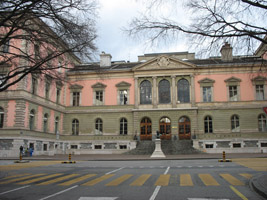
Geneva’s expansion after the Revolution of 1846
En 1846 éclate une révolution qui va faire entrer définitivement Genève dans l’ère démocratique. Une des premières décisions prises par le nouveau régime sera la démolition des fortifications qui corsetaient la ville et la construction, à leur place, d’une ceinture de boulevards, où les nouveaux idéaux (enseignement gratuit et laïque, liberté des cultes) s’inscriront dans la pierre : c’est ainsi que l’on y trouve surtout des bâtiments représentatifs tels que musées, écoles, nouveaux lieux de culte. Cette visite se fait en deux parties.
Book this tour directly with the guide:
Daniel Vuillamy
Evelyn Riedener
+41 79 202 60 68
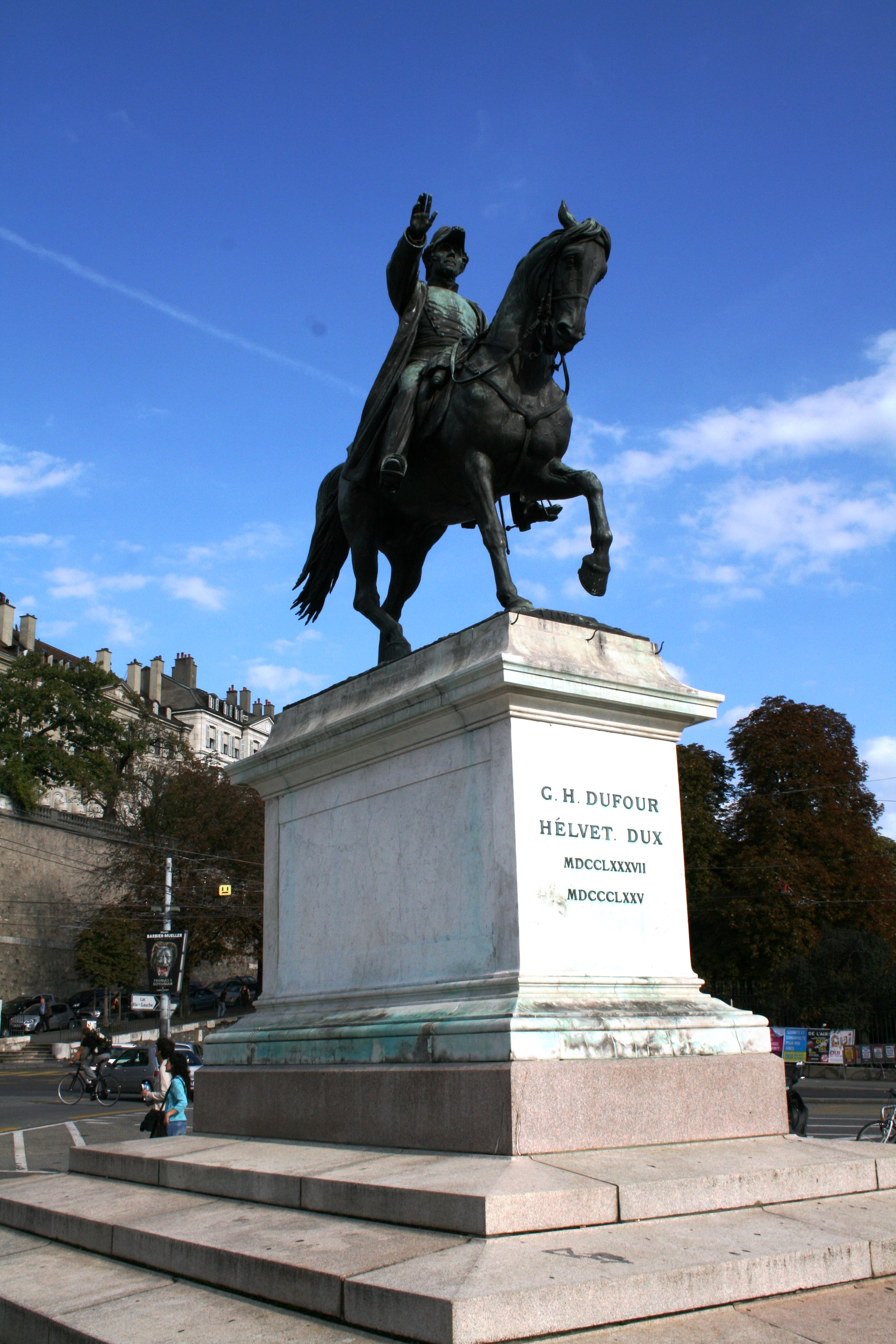
Guillaume-Henri Dufour au service de Genève dès 1817
After training and gaining military experience in France, Guillaume-Henri Dufour entered Geneva’s service during the Restoration as a cantonal engineer. He played a key role in modernizing the city. He taught mathematics at the Academy and oversaw the mapping of Switzerland. His military and diplomatic skills were tested during various Genevan and national crises. He also distinguished himself as a member of the International Committee of the Red Cross. This walk will take in the main places where Guillaume-Henri Dufour exercised his talents, from the Tranchées district, where he had his house built, to Cornavin railway station.
Book this tour directly with the guide:
Evelyn Riedener
+41 79 202 60 68
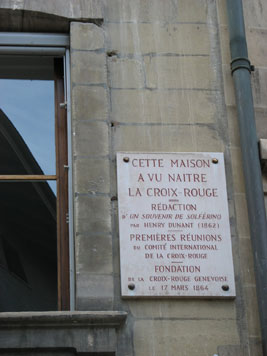
Henry Dunant et la Croix-Rouge
This Old Town walk highlights sites connected to the Red Cross movement, founded in Geneva in 1863. Along the way, we pass Henry Dunant’s birthplace, the former Geneva Casino, the Athénée Palace, and his former home on Rue du Puits-Saint-Pierre, where he wrote A Memory of Solferino. In 1864, twelve states adopted the First Geneva Convention at the Town Hall to improve the condition of wounded soldiers in the field. The walk can end by visiting the International Federation of Red Cross and Red Crescent Societies, the ICRC, and the International Museum of the Red Cross and Red Crescent.
Book this tour directly with the guide:
Evelyn Riedener
+41 79 202 60 68
Valérie Fontaine
+41 78 671 20 02
Anna Hamilton
+41 79 294 35 40
Emilie Bissardon
+33 664 23 00 30
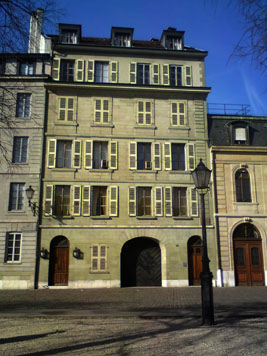
Autour de Rodolphe Töpffer
Auteur de deux romans dont les héros sont des pasteurs calvinistes et de quelques nouvelles, qu’on ne lit plus guère, Rodolphe Töpffer semble mener une vie assez terne dans l’atmosphère étouffante de la société genevoise de la Restauration. Il s’en échappe par la fantaisie débridée de ses “histoires en estampes”, jetant les bases d’un genre de narration qui deviendra primordial au XXème siècle: la bande dessinée. Le cinéma lui doit aussi beaucoup, notamment la grande tradition du burlesque. Avec cette visite, nous tenterons de mieux connaître ce personnage paradoxal, en retrouvant le cadre de vie qui fut le sien.
Book this tour directly with the guide: